






Rhodes is not only the largest island in the Dodecanese archipelago, it is also the most visited island in the area. If you are planning to spend a few days in Rhodes, take note of this route through the old town and fortresses of Rhodes. Make the most of your trip and get to know the most significant aspects of this area that is steeped in history.
Liberty Gate: the access point to the old town and fortresses of Rhodes
Located next to the commercial port, Liberty Gate is one of the main entrances to the old town. It was built in the 20th century, but its architectural style suits Rhodes' medieval feel.
From here, take a moment to check out the walls and be amazed by the fact they go on for more than two and a half miles.
Palace of the Grand Master
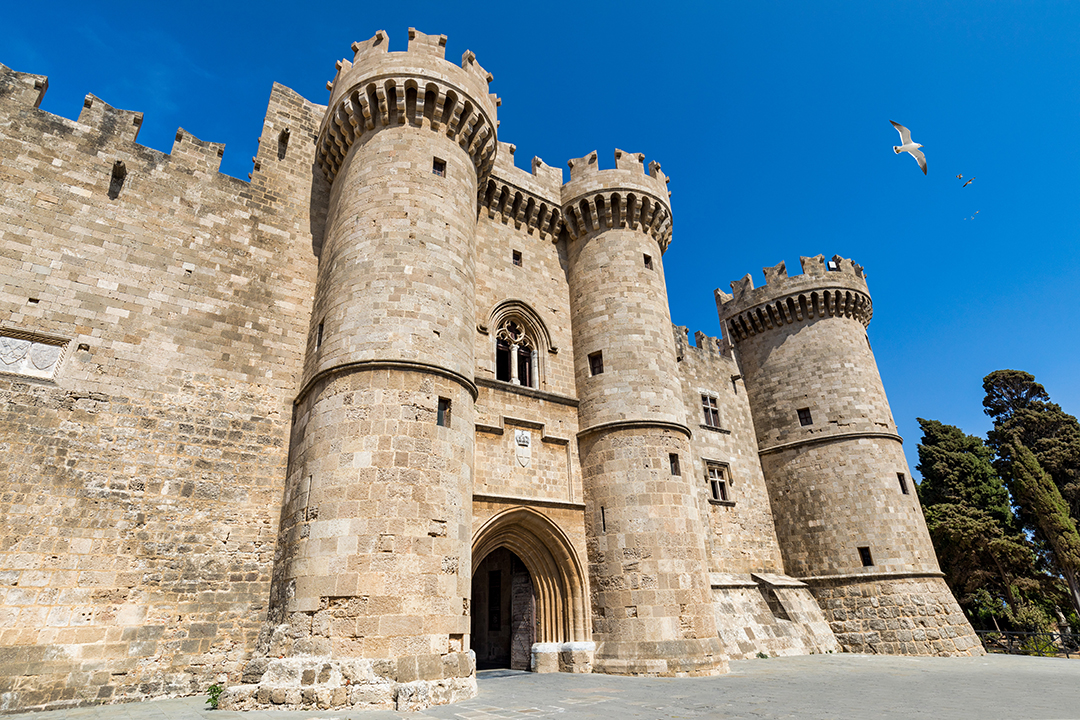
As soon as you pass through Liberty Gate you will see a colossal palace in front of you. It is the Palace of the Grand Master or Kastello, once the residence of the supreme leader of the Order of the Knights Hospitaller.
At first, this building was a Byzantine citadel, but it was transformed and enlarged in the 16th century. In 1856 it was partially destroyed by a gunpowder explosion. In 1937, under Mussolini's command, it was rebuilt as an official residence for the Italian leader, but it was never used as such.
Inside the palace there are different exhibitions of weapons, documents and belongings of the Order. What you cannot miss is the central courtyard, decorated with Roman columns brought from Kos. Pay attention to the mosaics on the floor, depicting mythological and marine scenes.
Of course, you can't miss a visit to the Throne Room, which has marble floors, tapestries, and the original medieval furniture fully restored.
Street of the Knights
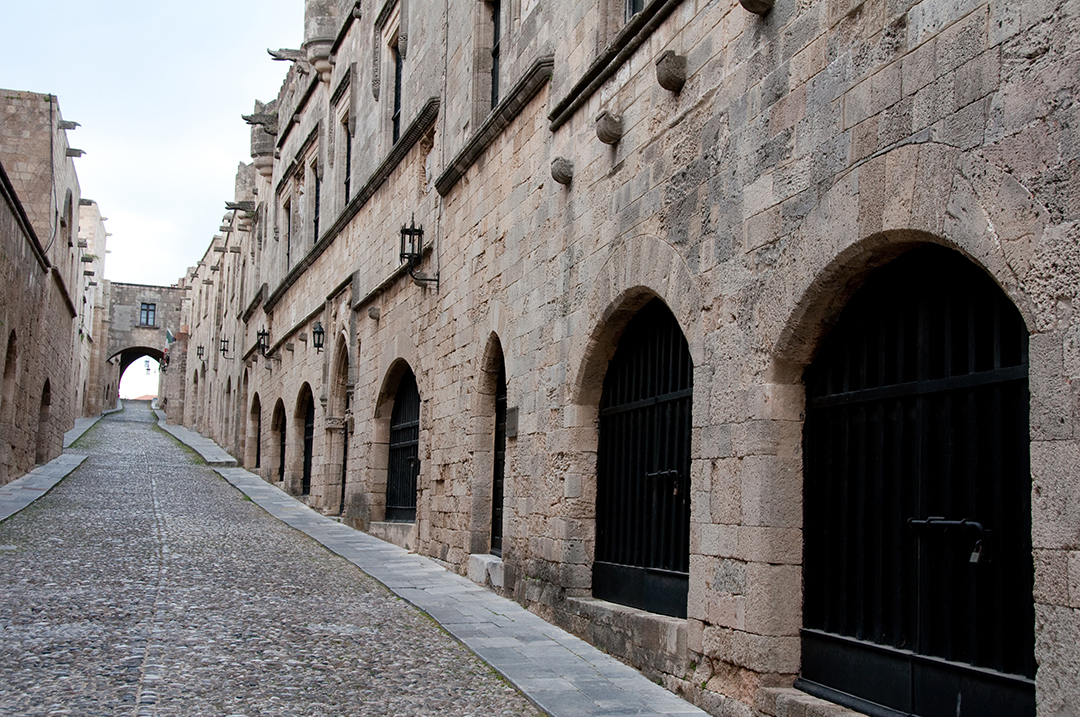
The Street of the Knights or Ippoton boasts one of the best preserved medieval streets in the world. In its 200 metres of length are the inns of the different 'Langues' (provinces or regions), among which you can find Aragon, Castile, France and England. You can distinguish them by the coats of arms carved on the facade.
Hospital of the Knights
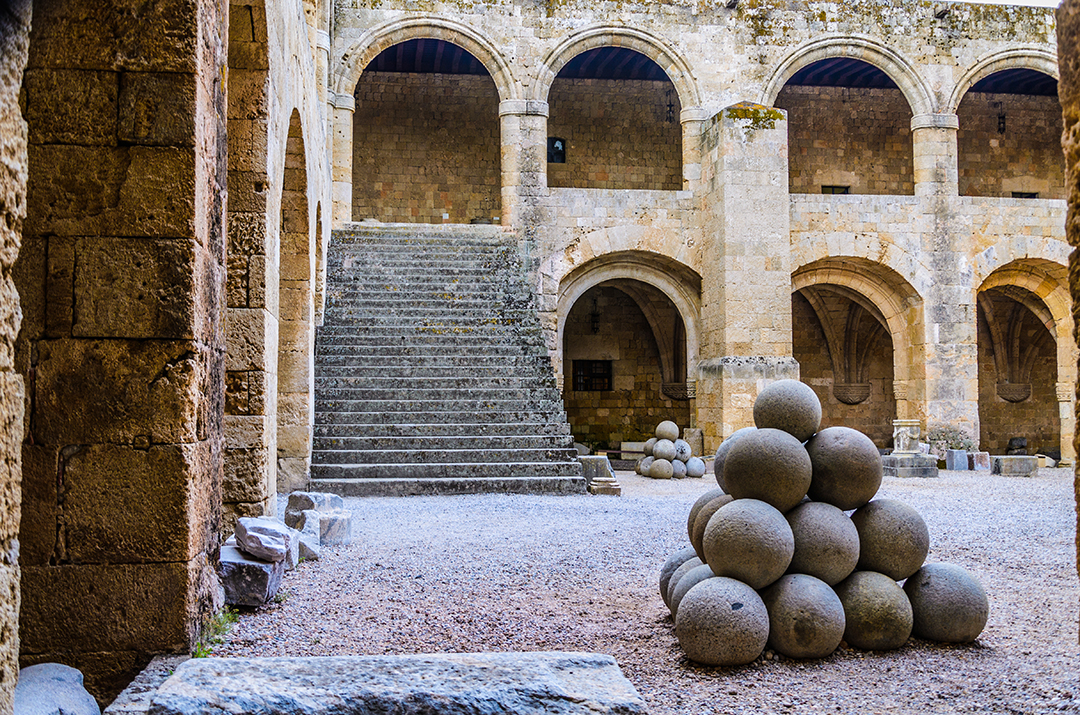
This two-storey Gothic building, built in the 15th century, is today the city's Archaeological Museum. Inside it houses one of the biggest art collections in the Aegean. One of its greatest treasures is the statue of Aphrodite of Rhodes, a sculpture from the 1st century B.C. found on the island.
During your visit to this museum do not miss the inner courtyard, which has the unique ambiance of a medieval monastery. In addition, you can visit a part of the hospital wing, where you can see the old stone beds.
Walls and bastions
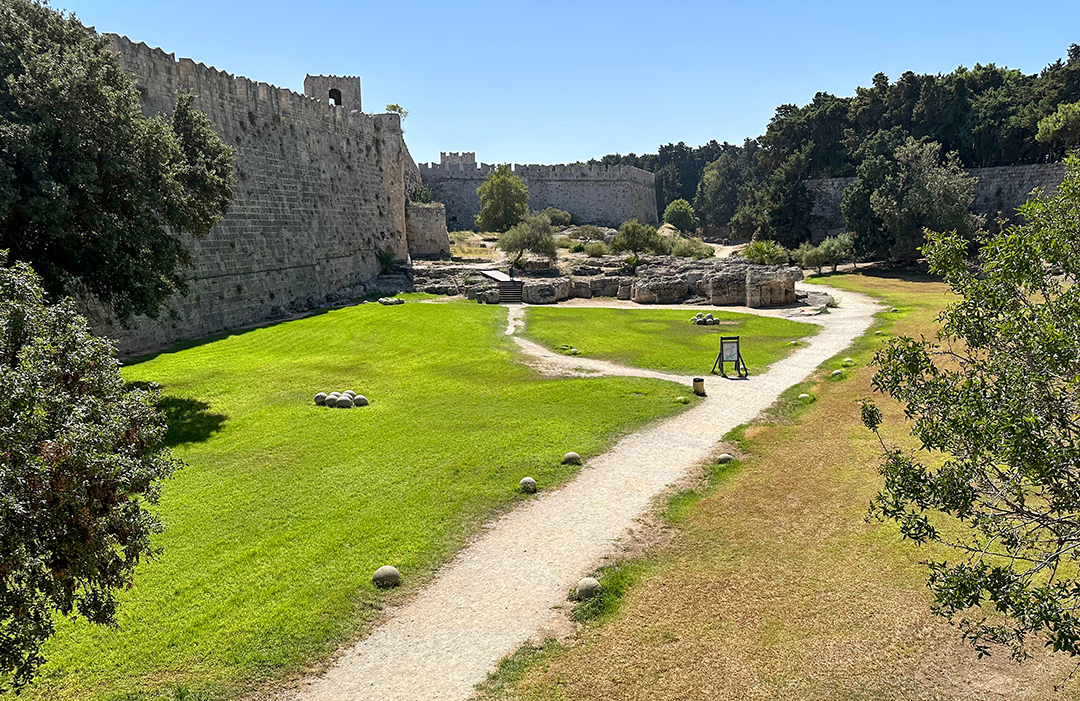
Rhodes' walls are one of its main tourist attractions. They were built and reinforced between the 14th and 16th centuries and withstood multiple sieges.
Things you can't miss:
- Dry moat. It is up to 20 metres wide in some areas and surrounds the entire perimeter.
- Bastion of St. George. The relief of St. George slaying the dragon is one of the most photographed spots on the island.
- Bastion of Italy. The thickest parts of the wall and the platforms for cannons are found in this area.
- North Wall. From here there are beautiful views of the sea and it is one of the best areas for a stroll.
Jewish quarter and synagogue: a must on the route through the old town and fortresses of Rhodes
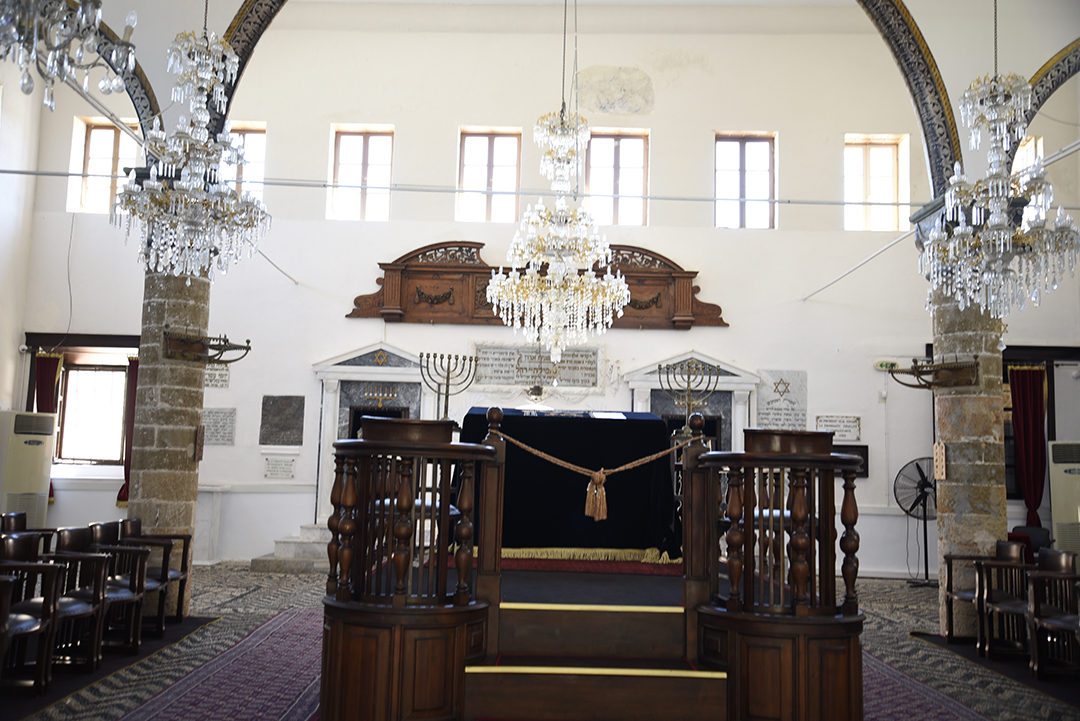
The Jewish settlement of Rhodes was, at the time, one of the most significant in the Mediterranean basin. One of the key places to visit is the Kahal Shalom Synagogue, the oldest synagogue in Greece. Today, it has been restored and is still in operation.
Another important spot is the Square of the Jewish Martyrs. It features an octagonal fountain and a memorial to the more than 1,600 Rhodesian Jews deported to Auschwitz after the Nazi occupation in 1944.
Mandraki Port and St. Nicholas Tower
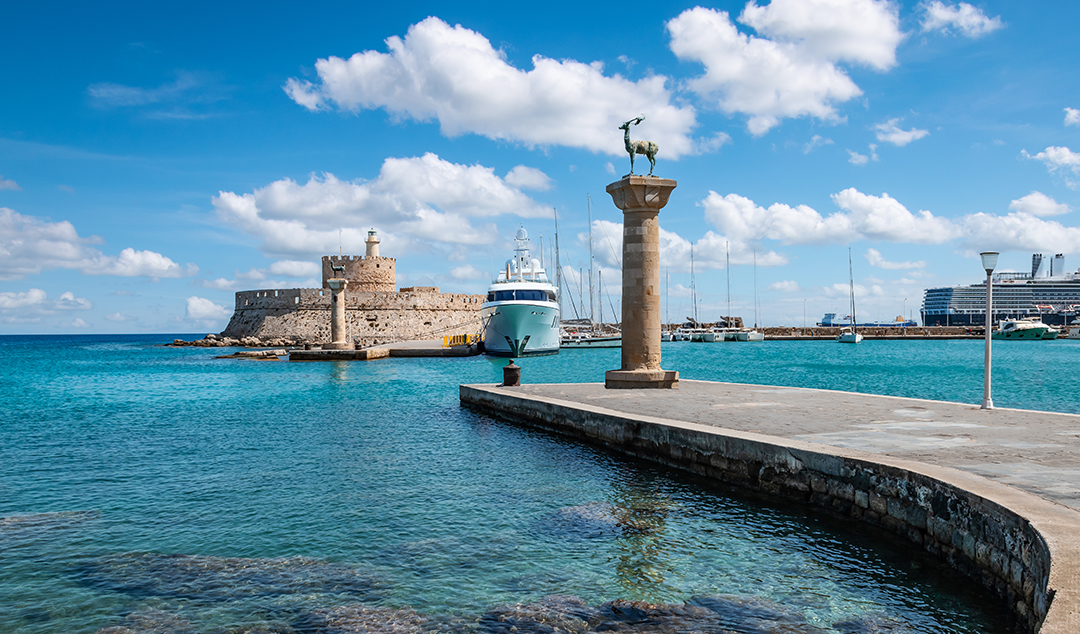
From the Sea Gate you can walk to Mandraki Port, which is the most photogenic port on the island. From here you can observe the columns of the stag and the hind, where the Colossus of Rhodes is supposed to have stood.
You can also see St. Nicholas Tower, a fortress built in the 15th century to defend the maritime entrance. As well as the medieval windmills, there stand three stone structures that were used to grind grain arriving on ships.
The old town and fortresses of Rhodes are a living stage of everything that has happened on the island. If you want to explore it at your own pace, we recommend spending at least a couple of days there and renting a car in Rhodes with OK Mobility.
post